Self-service was introduced to make operations simpler, faster, and more scalable. And on the surface, it succeeded. Customers serve themselves effortlessly. But behind the scenes, the opposite has happened: as fleets grow, control fragments.
Self-service was never designed as a single system. It emerged over years of incremental additions: machines from different vendors, each with their own logic, their own portals, their own integrations. For the customer, it looks like convenience. For the organization, it often feels like a patchwork of disconnected islands that don’t quite work together.
A landscape that was never designed to work as one
Many machines in today’s self-service environments still run on MDB, a communication protocol from the 1990s originally intended for simple snack dispensers. It became the standard not because it was ideal, but because no coordinated alternative ever replaced it. Meanwhile, the demands on these machines have changed dramatically: QR journeys, mobile payments, loyalty integrations, cloud connectivity, real-time data, and remote pricing.
MDB wasn’t built for any of this.
To make things more challenging, every manufacturer interprets the protocol differently. Message timing varies, signal logic diverges, and what works for one machine fails on another. Integrated setups often behave like separate systems rather than one.
Kay Bult, Product Manager at SmartNow, sees this daily: “MDB seems like a standard, but every manufacturer interprets or implements it slightly differently. A difference of just a few milliseconds in how a signal is sent can already cause an integration to fail.”

Sometimes, these issues go unnoticed by guests. A payment goes through successfully, but the machine doesn’t return reliable data.
At other times, the breakdown is immediate: a QR flow that won’t start, a payment that gets stuck, or a machine that refuses to dispense because it never received the right confirmation.
In both cases, the organization loses control: either behind the scenes or directly in front of the customer.
The three structural gaps that appear as self-service scales
Where transactions succeed but insight stops
Many payment terminals process transactions correctly but fail to return product-level data. Retailers see revenue but not the story behind it. They can’t see which recipes generate margin, which machines consistently underperform, which promotions work, or how demand fluctuates throughout the day.
Without a shared data layer, every team ends up steering on assumptions. Operations loses visibility into performance, category and formula teams lose context, and IT lacks the single source of truth needed for stability and scalability.
As Kay puts it, “If you only connect a payment terminal, you know the totals but can’t see the story behind these totals. And you can’t optimize what you can’t see.”
Where time quietly disappears in daily operations
Because systems don’t work together by default, people end up bridging the gaps manually.
That means downloading exports, retyping numbers into POS systems, reconciling mismatches, updating prices manually, and stitching together reports that should have been automated.
Some retailers lose thousands of hours per year to tasks that add no value; it’s pure overhead. Teams don’t want to spend time fixing data. They want everything to work end-to-end: from the moment a guest presses a button to the moment the finance team reviews the numbers.
When the experience stops feeling effortless
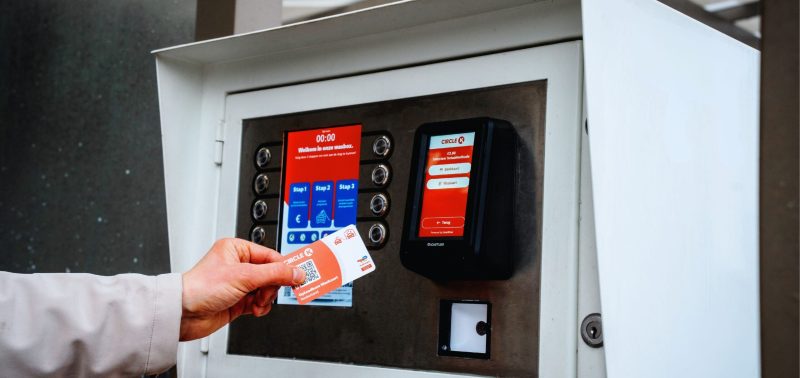
A self-service action should be effortless: choose, pay, continue. Yet in practice, one machine can behave like three different systems. The screen points in one direction, the terminal in another, and the scanner does not match the flow at all.
Over time, additional instructions get added, often placed manually by store teams trying to help customers navigate what the technology should have made obvious.
“Customers do not see a natural order. If the flow is unclear, the environment starts compensating for it,” says Kay.
The inconsistency becomes even more obvious when customers move between machines. They go from a coffee machine to a vending unit or a toilet gate and expect the same speed, clarity, and logic. When every machine follows a different flow, the environment feels fragmented instead of cohesive. That directly affects the customer experience.
The missing owner of the end-to-end experience
Fragmentation wasn’t created by bad decisions. It emerged because no one ever took ownership of the entire ecosystem. Machine manufacturers optimize their own hardware. PSPs optimize their own payment flows. Retailers expand their machine fleets as the formula evolves. But no one safeguards the connective tissue.
As a result, every innovation starts to feel like a custom project. Promotions take longer to roll out. Loyalty behaves differently per machine. Uptime becomes harder to manage. Data spreads across portals instead of forming one coherent picture.
Self-service was meant to bring simplicity and efficiency. When machines act like separate systems instead of one, teams spend increasing time, money, and manpower maintaining what should have been a simple, automated process.
What organizations really want: for everything to simply work
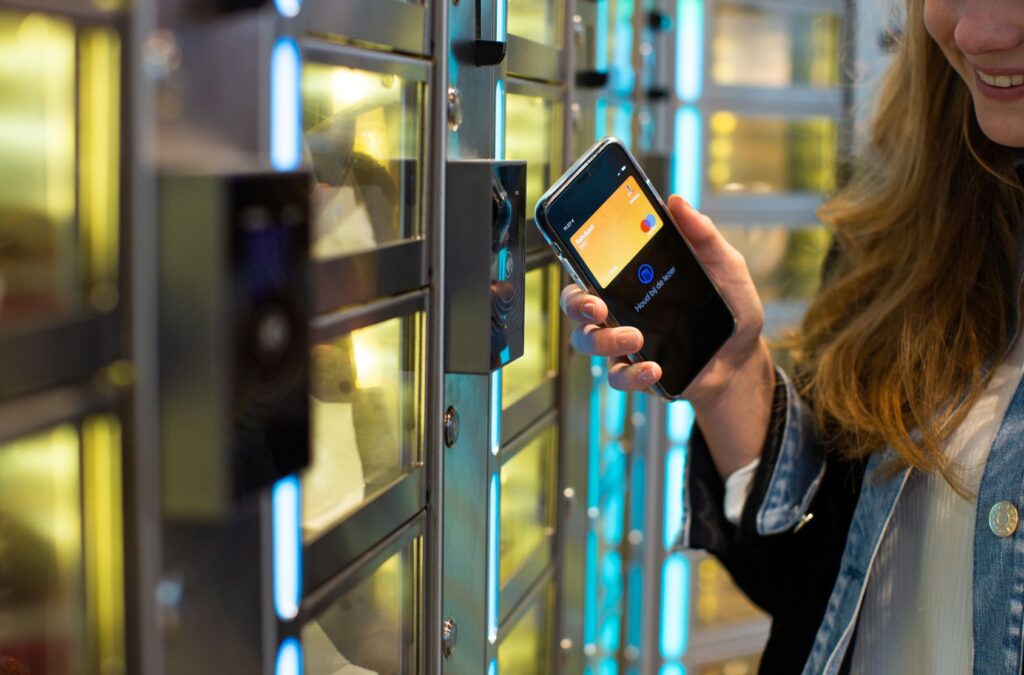
At the end of the day, organizations (and their customers) want one thing: they want self-service to work the way it was promised. They want a setup they can trust. Machines that behave consistently. Customer journeys that feel natural. Payments that never raise questions. Data that is clear and complete, so every team, from daily operations to finance, knows exactly where they stand.
They want a predictable experience across every machine and every location. No hacks, no workarounds, no unnecessary noise. Just a system that does what it is supposed to do. Because when everything works, the focus shifts from keeping things running to moving the entire operation forward.
Self-service was meant to simplify operations. When it’s treated as a system instead of a collection of machines, it finally does.
Reach out and see how simple and reliable self-service can become for your teams and customers.